No products in the cart.

Villa Le Corti: A Bioclimatic Organism

Villa Le Corti: A Bioclimatic Organism

The Architecture of Villa Le Corti: The Vision of Santi di Tito

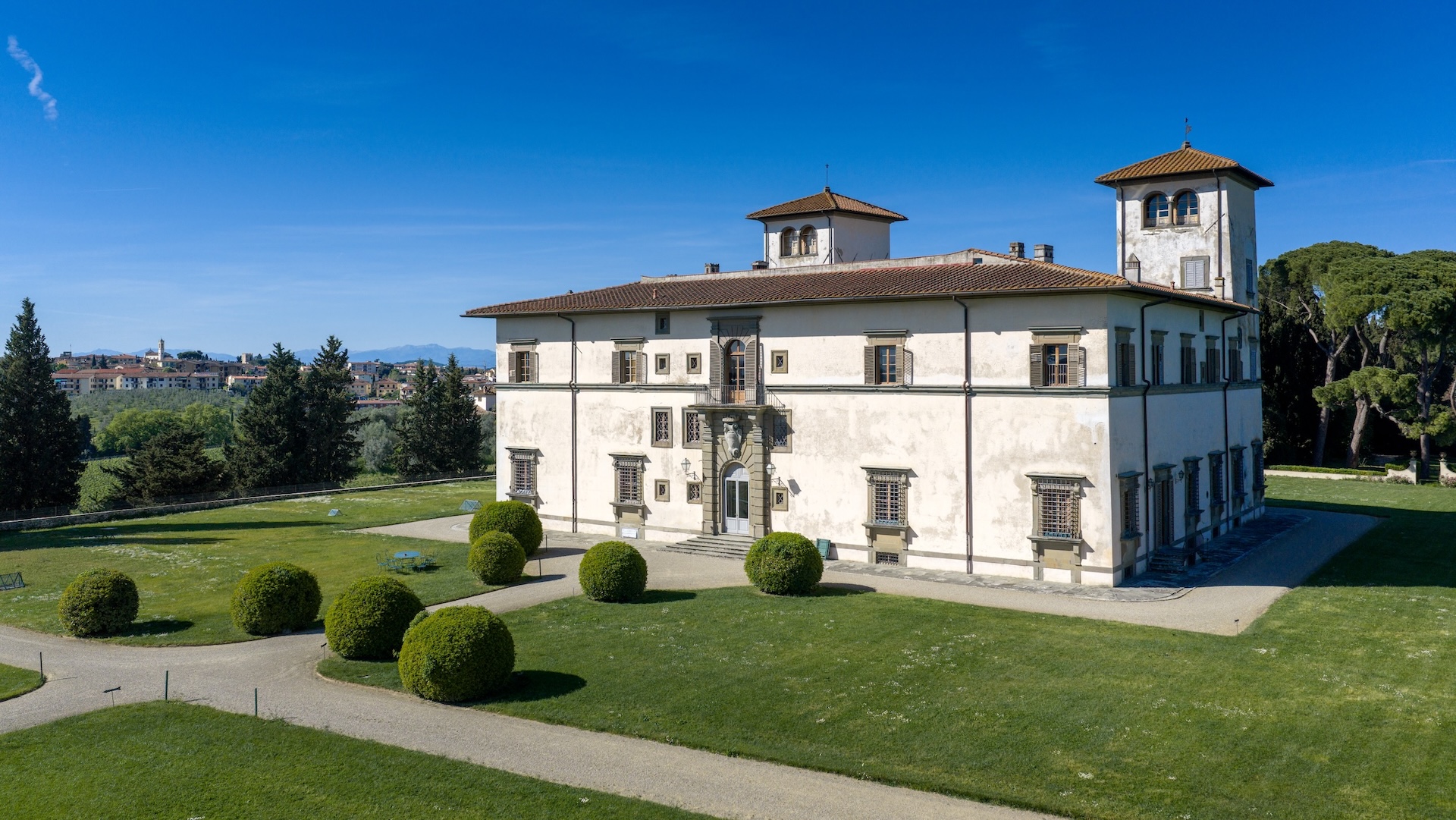
In the design of Villa Le Corti, the illustrious painter and architect Santi di Tito was able to anticipate the modern concept of a residence understood as a true “total organism”. In this extraordinary architectural vision, the human intellect governs in absolute harmony both the perfect symmetry of the palace and the symbolic and landscape transformation of the surrounding nature.


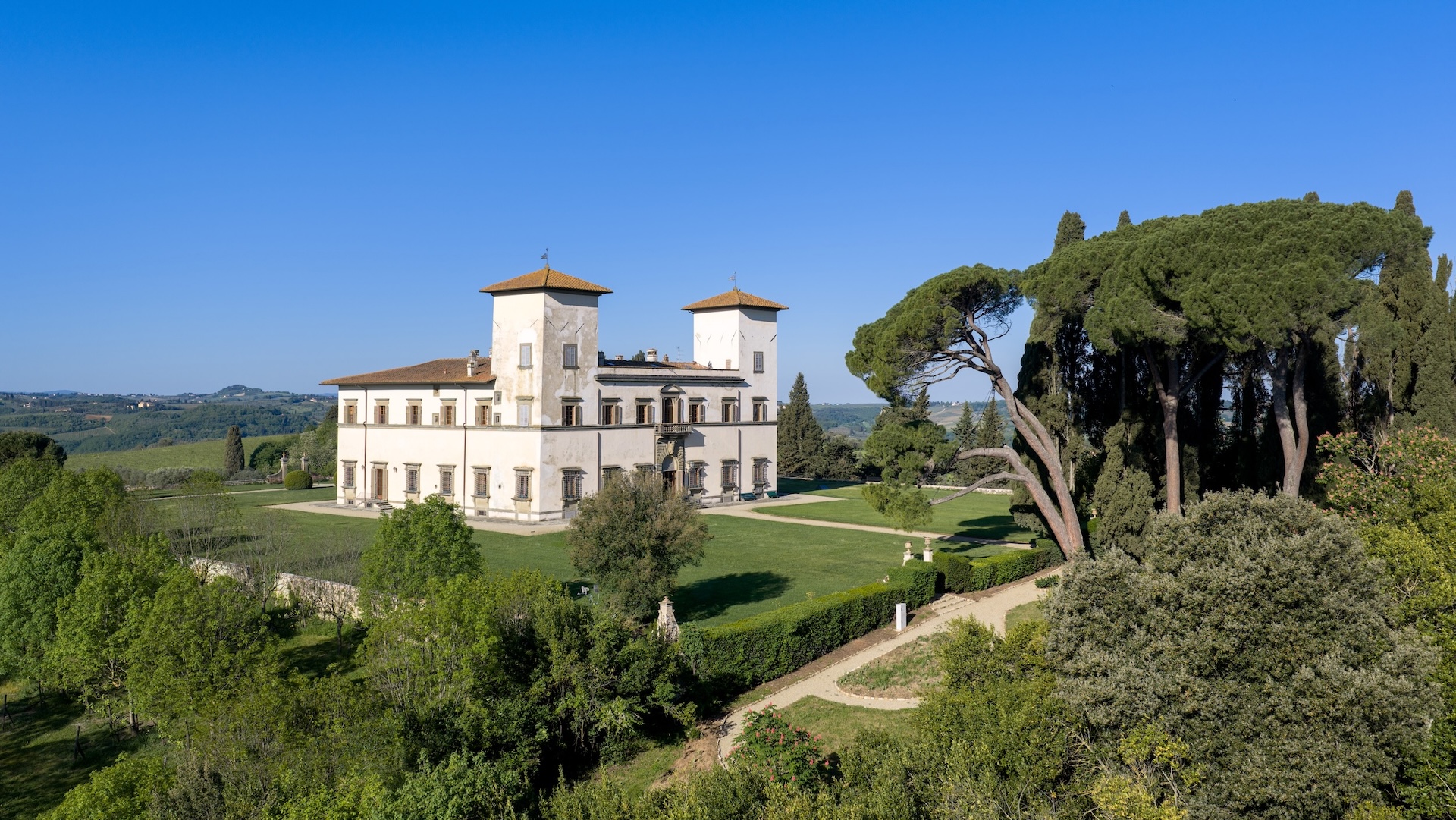
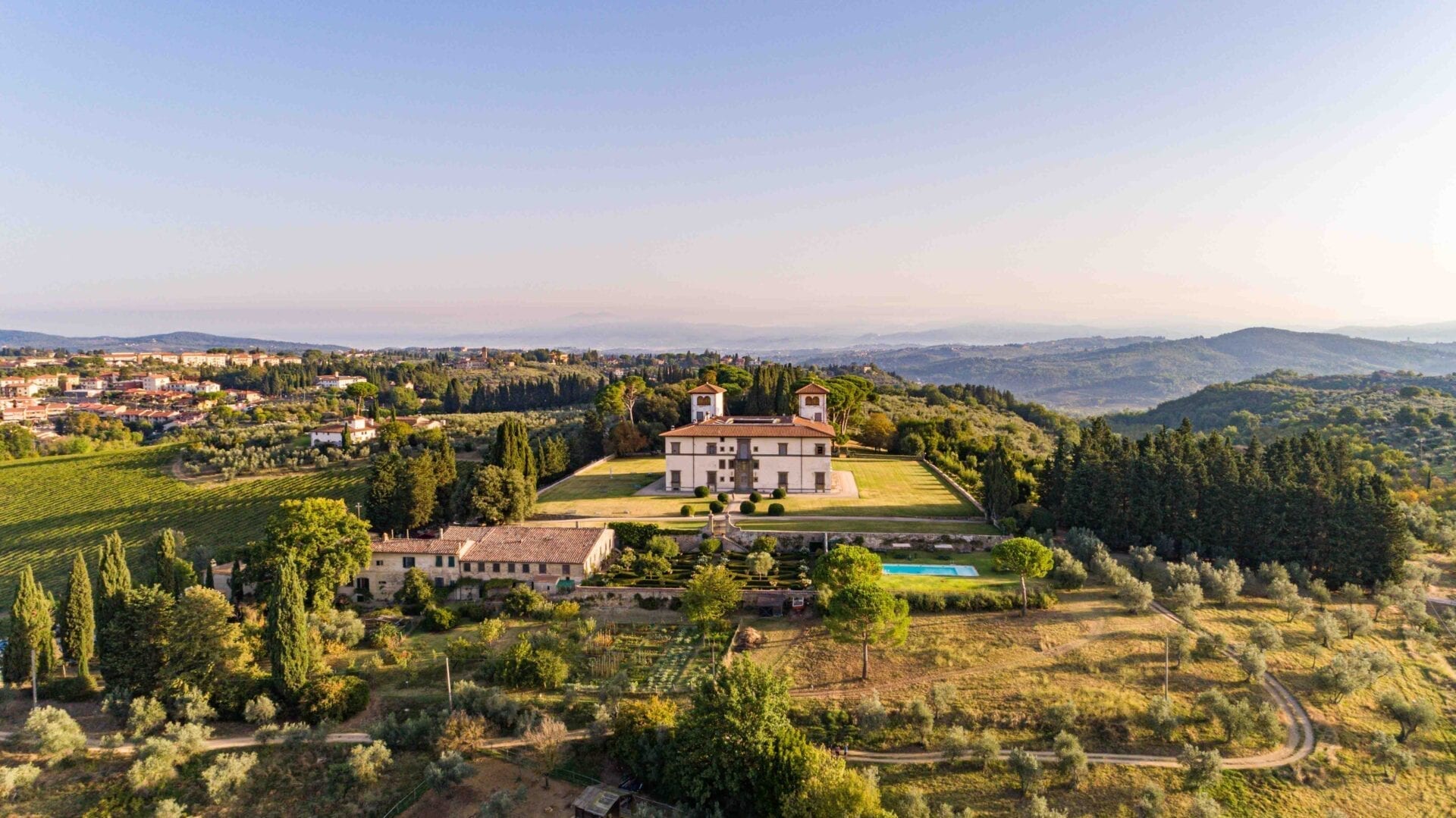
Having received the commission directly from Bartolomeo Corsini at the end of the sixteenth century, Santi di Tito gave life to a structure of timeless charm. It is no coincidence that, exploring the historical vocabulary and the ancient archival documents of the Corsini family, this majestic monumental complex is accurately described and celebrated as an imposing “quadrangular edifice”.

The Square "Edifice" with Two Towers: Renaissance Influences

In conceiving the architecture of Villa Le Corti, Santi di Tito brilliantly merges the geometric concepts of Serlio, linked to the fortified perimeter, and the functional layout theorized by Palladio. The result is a structure with perfect proportions, clearly inspired by the harmony of Leon Battista Alberti.

The Architectural Treatises and the Geometric Layout

The rigorous structure of three concentric squares on which the villa stands is directly based on the cornerstone texts of Renaissance architecture:

  • Leon Battista Alberti (De re aedificatoria, 1452): theorizes the need to proportion the courtyard (atrium) to the building following precise square numerical ratios (such as 1:1 or 4:3). In this vision, the garden also becomes a geometric extension of the house.
  • Sebastiano Serlio (The Seven Books of Architecture, 1537-1575): in his diagrams dedicated to “Fortress Palaces”, Serlio formalizes the use of corner towers, strictly positioned to the North. This architectural device serves to balance the entrance facades and to inscribe civil residences within rigid square defensive perimeters, transforming the house into a bastion of the intellect.
  • Andrea Palladio (The Four Books of Architecture, 1570): consecrates the use of barchesse (colonnaded outbuildings) or symmetrical towers to elegantly frame the square central body. Palladio also defines the internal courtyard as the true fulcrum of the building, essential for ensuring ventilation, light, and spiritual centrality to the living spaces.

The House as an Active Device

Over the centuries, the imposing architectural “edifice” of Villa Le Corti has proven to be not just a simple theatrical backdrop, but to operate as a true integrated bioclimatic organism. Designed along a rigorous energetic axis, the residence is structured through a very precise spatial flow:

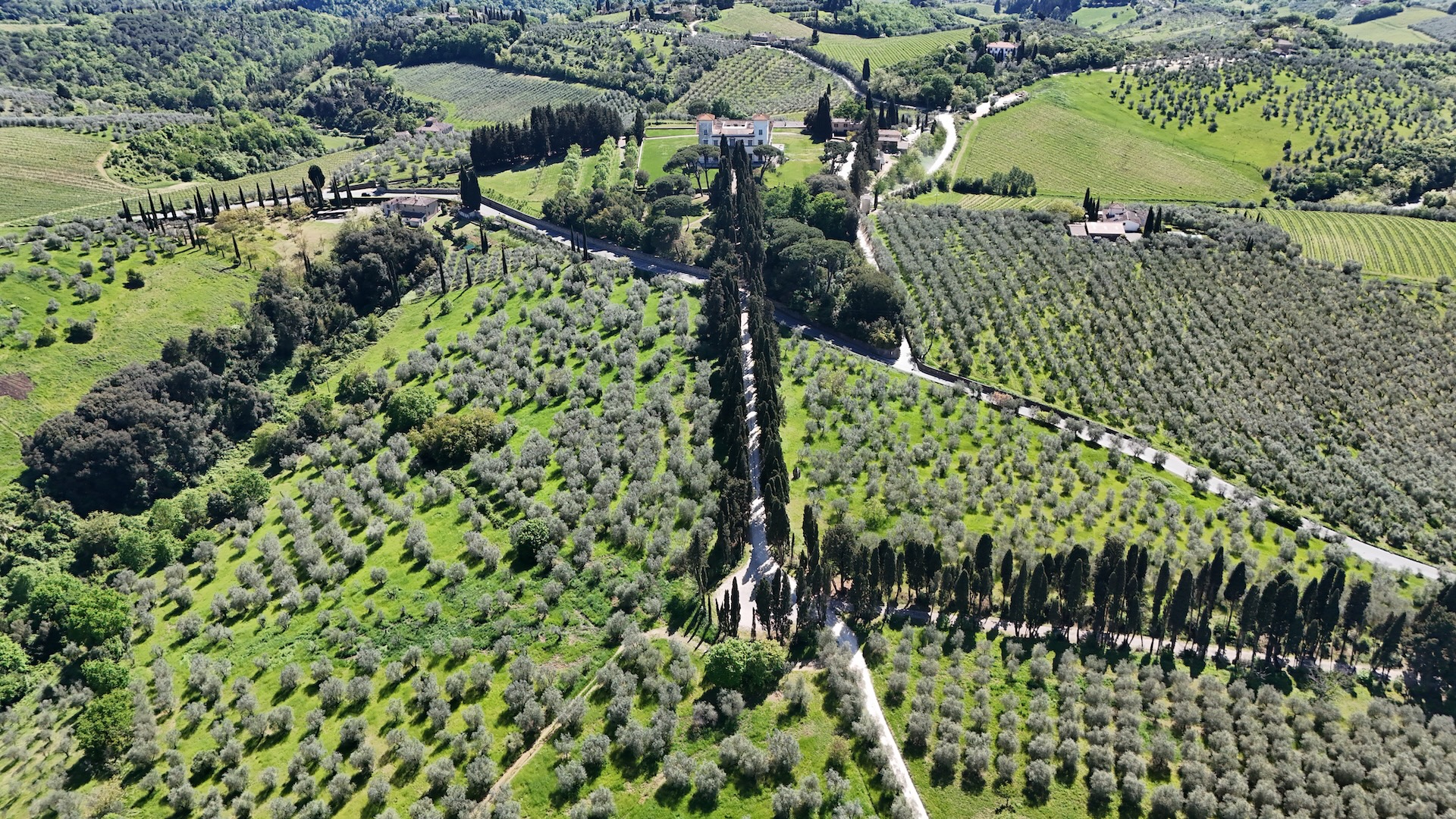
  • North: represents shade, the visual channel, and the unconscious, an area dominated by the Avenue of Cypresses and the romantic woodland.
  • Center (Villa Le Corti): the square body of the building, where the two corner towers act as energy accumulators.
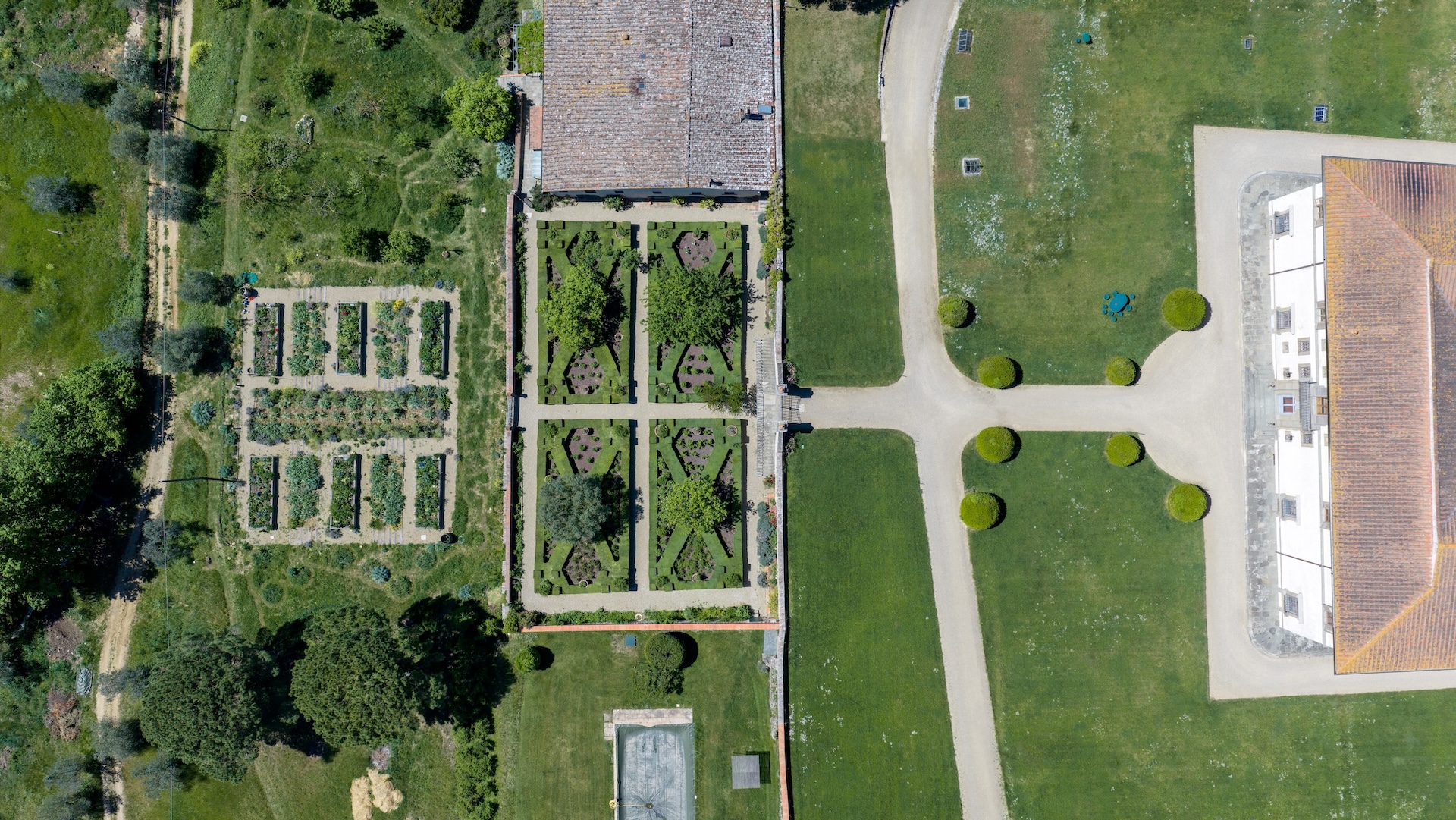
  • South: represents the sun, dominated by the geometries of the Italian garden and the potential of the energetic vegetable garden.
  • Antennas and pyramids: The final point of energetic grounding.

The Villa at the Center: The Energetic Heart

The two large northern towers lose their original defensive purpose to transform into catalysts for air masses and volumes, while the internal courtyard acts as a vital compensation and ventilation chamber for the entire complex.

Natural energies, from solar radiation in the South to atmospheric currents, are channeled along this central axis and, through the electroculture vegetable garden, are literally “fixed” into the soil. In this way, Villa Le Corti becomes a self-sufficient microcosm, anticipating by centuries the contemporary concepts of bioarchitecture and vibrational agriculture. It is a place where human well-being, architecture, and the fertility of the earth are regulated by the same invisible currents.

The Three Concentric Squares: The Hierarchy of Manifestation

The entire layout is based on a fascinating geometric system composed of three squares encapsulated within each other, symbolizing the gradual transition from the chaos of external nature to the purity of the inner spiritual core:

  • The Outer Square (The Great Lawn): represents Ordered Nature (the Kosmos). The square lawn symbolizes the earth tamed by human intellect, the raw material that is wisely enclosed and rescued from the chaos of the wild forest (silva).
  • The Intermediate Square (The Villa): symbolizes Man and Civil Order. The perimeter wall of the house acts as a protective barrier and an element of mediation. It constitutes the conscious plane, the social and architectural structure that establishes the dominion of the spirit over matter.
  • The Inner Square (The Courtyard): represents the Sacred Void and the Divine Core. The central courtyard, that is, the void around which the solid mass of the building is articulated, is the emblem of the Anima Mundi or the Origin. This square expresses the utmost architectural stability and spiritual immutability; being open upwards, it serves as a direct portal to connect the earthly geometric center with the infinity of the sky.

The Historical Gardens of Villa Le Corti

The historical gardens of Villa Le Corti recount centuries of landscape history, developing along two opposing axes (North and South), in a perfect balance between the instinct of wild nature and the geometric rigor of the intellect.

The North Axis

The northern sector of the park has undergone numerous evolutions over time, creating today an approach path to the villa with a strong scenographic impact:

  • The Avenue of Cypresses (the rational geometric axis): access to the residence from the north side occurs through a monumental and rectilinear tree-lined avenue. This imposing green pathway acts as a true optical telescope, channeling the visitor’s perspective directly towards the Renaissance facade.
  • The Romantic Gardens (the break of geometry): nestled on the sides of the main avenue hide the landscape gardens of Donna Anna and Don Tommaso, commissioned by the Corsini family at the end of the nineteenth century. As highlighted by garden historians, this addition perfectly embodies the contrast typical of Tuscan eclecticism: those who stroll through it cross an asymmetrical and sentimental “woodland”, only to then arrive at the sudden revelation of the mathematical and essential order designed by Santi di Tito.

The South Axis

Exiting the main building towards the south, the scenery changes radically and one enters the open and bright spaces of the Italian garden (Giardino all’Italiana), which houses a true botanical itinerary. Here, the controlled chaos of the north axis gives way to the absolute dominion of form: it is the triumph of the square, of perfect symmetries, and of perspective, where nature becomes architecture to celebrate the harmony of the villa above.

The Electroculture Vegetable Garden: Energetic "Grounding" at Villa Le Corti

The transition from the Formal Garden to the electroculture vegetable garden is not a mere theoretical vision, but a concrete and innovative avant-garde agro-ecological project, now fully implemented in the restored historical gardens of Villa Le Corti.

Read our article on Electroculture

Courses and Experts in Energetic Agriculture

Today, the residence is a true reference center for this discipline. It regularly hosts courses and practical workshops dedicated to energetic agriculture, led by prominent figures such as Andrea Donnoli (founder of the Vibrational Energetic Academy), in close collaboration with Clare Orchard and Mirco Braghiroli, the managers who directly tend to the villa’s vegetable garden.

How the Vibrational Vegetable Garden Works: Science and Nature

The design of the garden is based on a fascinating and rigorous physical system:

  • Passive conduction structures: devices made of highly conductive materials such as copper, galvanized iron, and brass are installed inside the garden.
  • Resonators and antennas: these elements work to intercept and channel the frequencies of terrestrial magnetism and the electric fields of the atmosphere.
  • Natural stimulation: the captured energy is discharged directly into the soil, boosting plant metabolism and the vitality of the plants in a completely natural way, without the aid of any chemical substances.

As a testament to the deep historical bond between the residence and agricultural science, Villa Le Corti organizes highly popular thematic events, such as the days dedicated to “Free Energies“. During these events, the elegant rooms of the villa transform into an exhibition space where it is possible to admire original documents and drawings preserved in the precious Corsini Historical Archive, enriched by a rare collection of vintage volumes that retrace the history and the dawn of electroculture from the 1930s to the present day.

Request more information

Contact us for more information.

Contacts